Belt Sizing & Unit Capacity
Convert sludge feed and solids content into operating-day dry-solids loading, then determine required belt width, selected belt capacity, and duty / standby configuration.
Engineering Excel Workbook
Develop a preliminary belt filter press sludge-dewatering design in a structured Excel workbook. Calculate dry-solids processing demand, required and selected belt width, washwater and polymer consumption, cake–filtrate mass balance, and average / peak operating requirements.
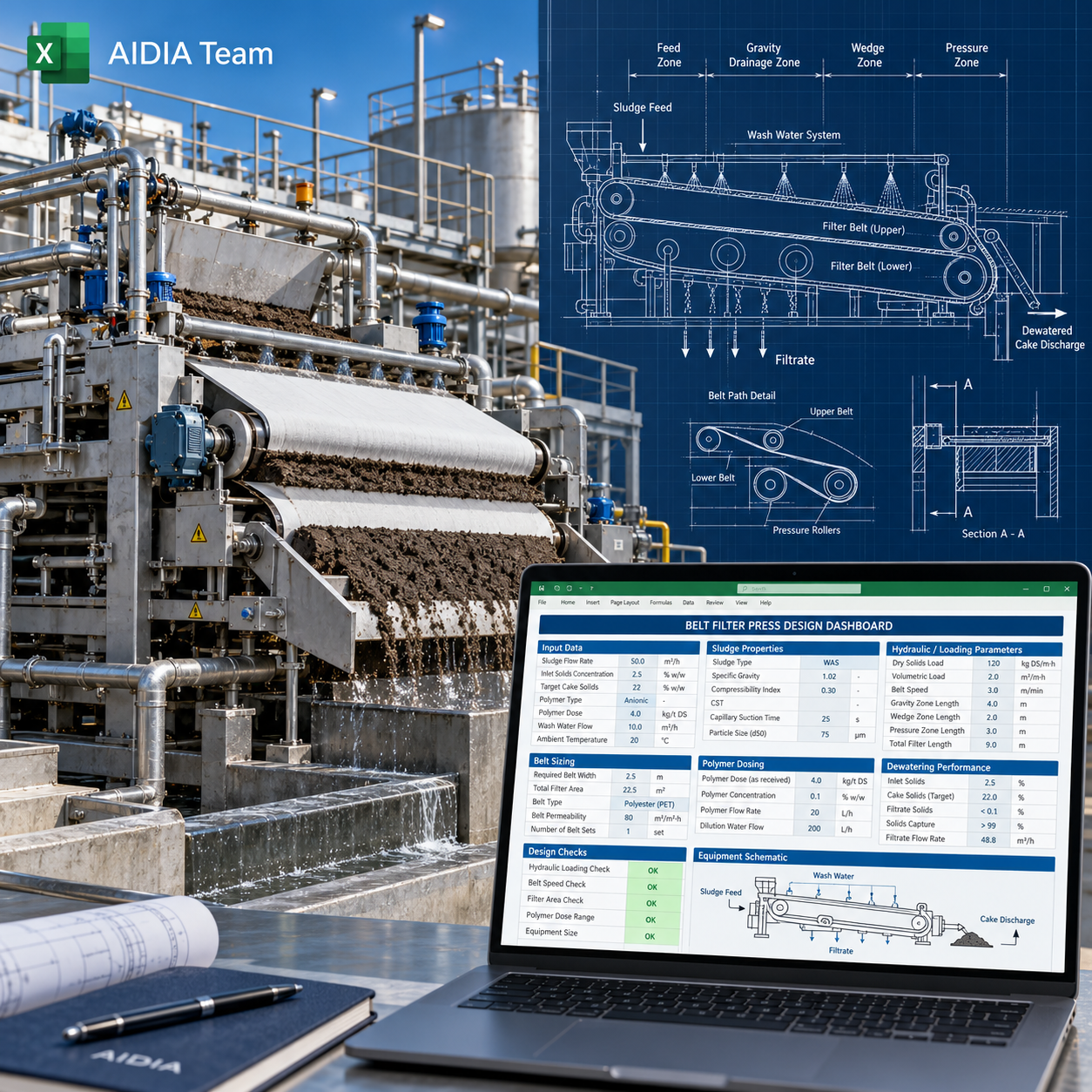
Convert sludge feed and solids content into operating-day dry-solids loading, then determine required belt width, selected belt capacity, and duty / standby configuration.
Estimate dewatered cake and filtrate production using selected cake solids, filtrate suspended solids, and solids-capture assumptions.
Calculate washwater and polymer demand, operating hours under normal loading, and extended running hours for sustained peak conditions.
A connected sludge-dewatering workflow, from feed solids and equipment selection through mass balance, consumables, and operating checks.
Workbook Experience
Explore actual Dashboard and Calculation Sheet previews from the workbook.
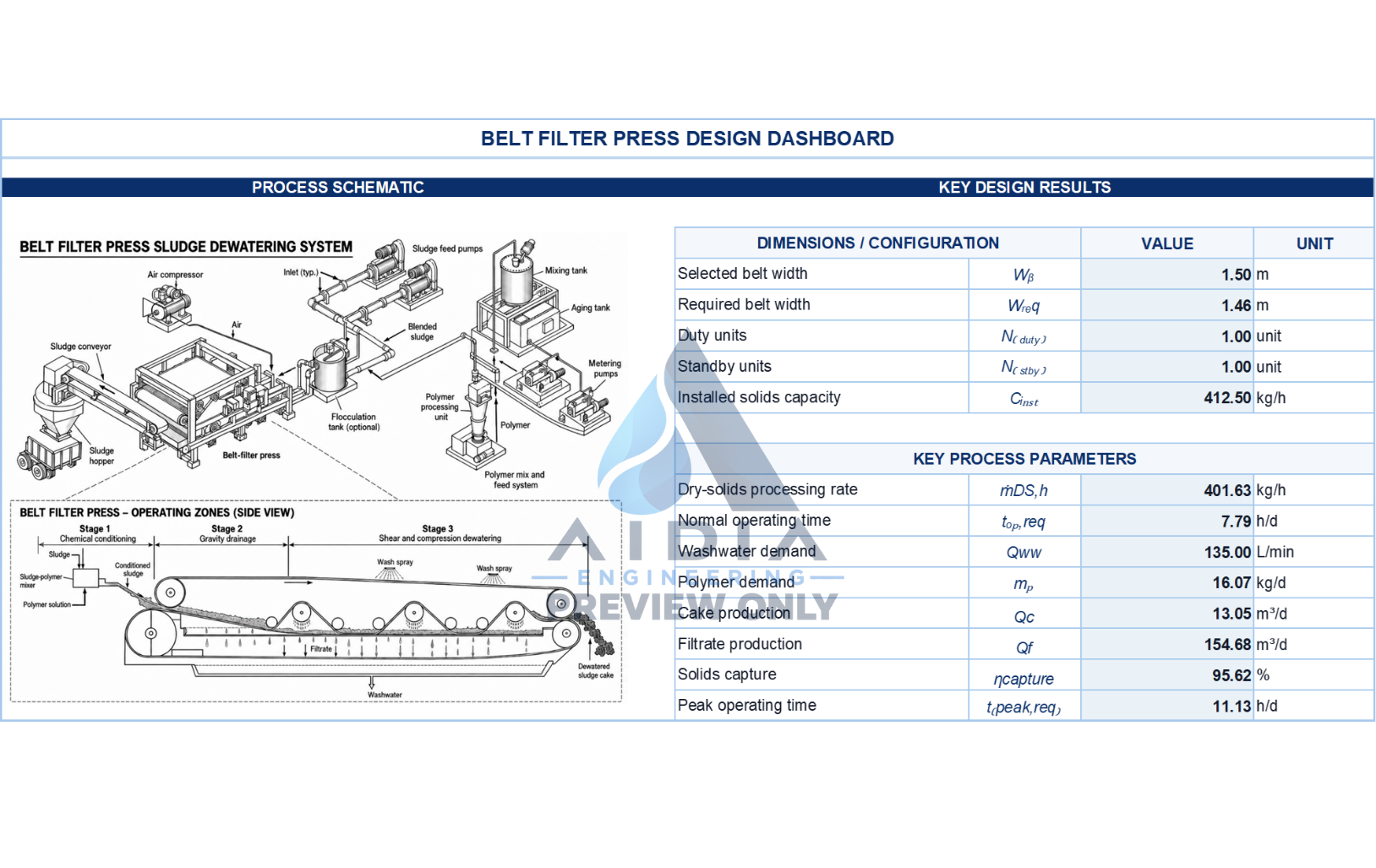
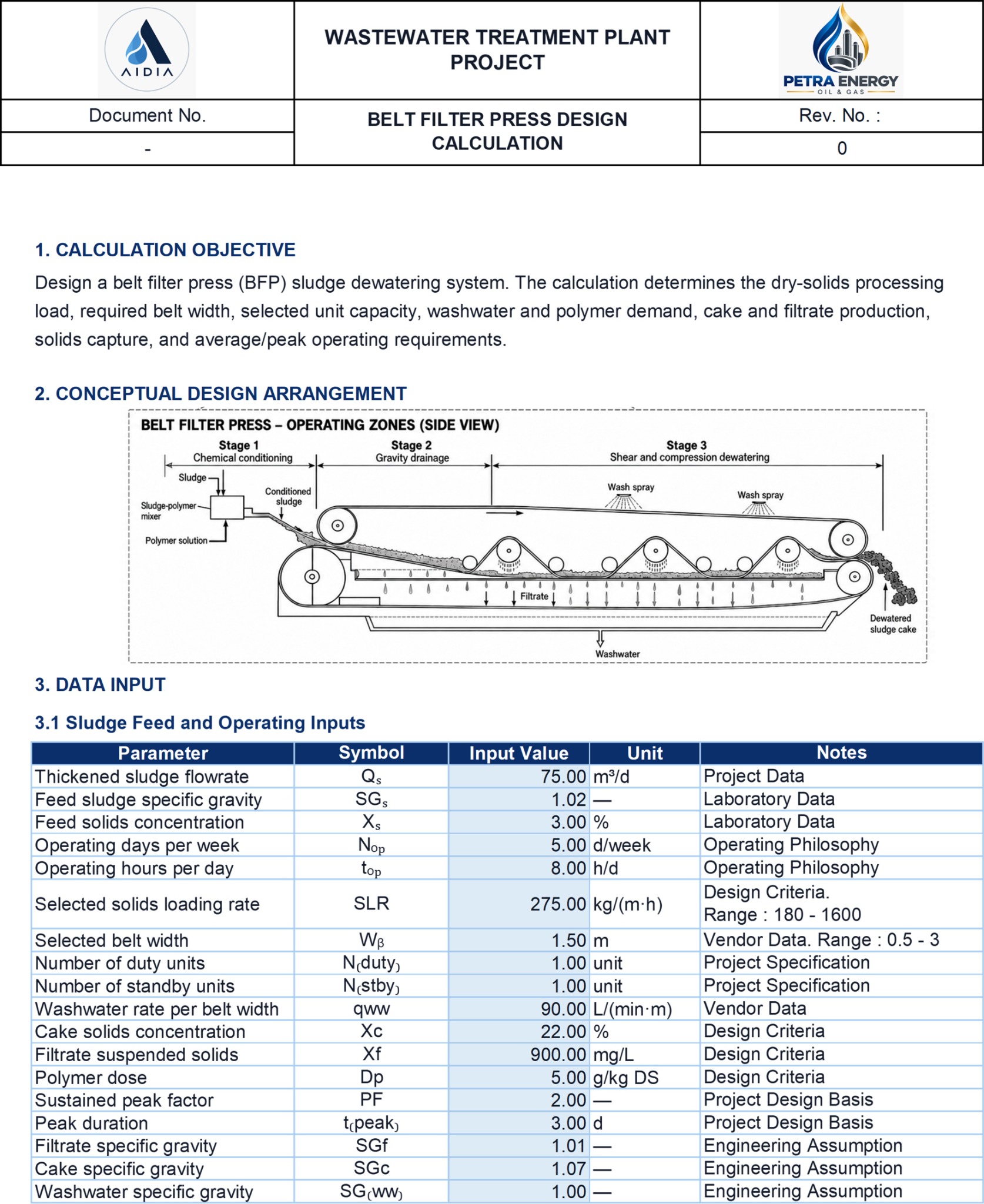
Original Belt Filter Press Dashboard excerpt showing equipment schematic, belt configuration, solids capacity, utilities and dewatering mass balance.
Evaluate selected belt press loading and operational assumptions within a preliminary engineering review workflow.
| Review Item | Workbook Evaluation |
|---|---|
| Belt width & solids capacity | Compare selected belt width and installed dry-solids processing capacity with calculated duty requirements |
| Normal operating runtime | Evaluate the time needed to process scheduled solids against available operating hours |
| Peak operating runtime | Estimate peak-loading runtime under duty-only and duty + standby unit scenarios |
| Cake / filtrate balance | Review wet cake, filtrate volume, and solids capture estimates based on selected concentrations |
| Washwater & polymer | Estimate utility demand and conditioning chemical consumption at the design basis |
Peak check acceptance may use extended operating hours rather than the normal daily shift. The peak-duration input must be reviewed separately for multi-day operational planning. Equipment selection, achievable cake dryness, capture efficiency and consumption rates require vendor or field confirmation.
Instructions & assumptions
Project information
Solids, belt sizing & mass balance
System schematic & design outputs
Symbols & units
Sludge-specific design ranges
This workbook provides preliminary engineering calculations and review support. Final sludge conditioning, equipment capacity, cake performance, washwater demand and operating philosophy must be verified with project-specific and vendor data.
Bring sludge feed conditions, equipment loading, dewatering mass balance and operating requirements into one structured engineering workbook.