Airflow & Bed Sizing
Convert enclosure volume and air-change assumptions into design airflow, or use a direct airflow input. Determine biofilter bed area, media depth, and rectangular bed dimensions.
Engineering Excel Workbook
Size a packed-bed biofilter for preliminary odor control using a structured Excel workbook. Determine design airflow, bed area and media volume, and evaluate empty bed residence time, H₂S mass loading, elimination capacity, and selected operating criteria.
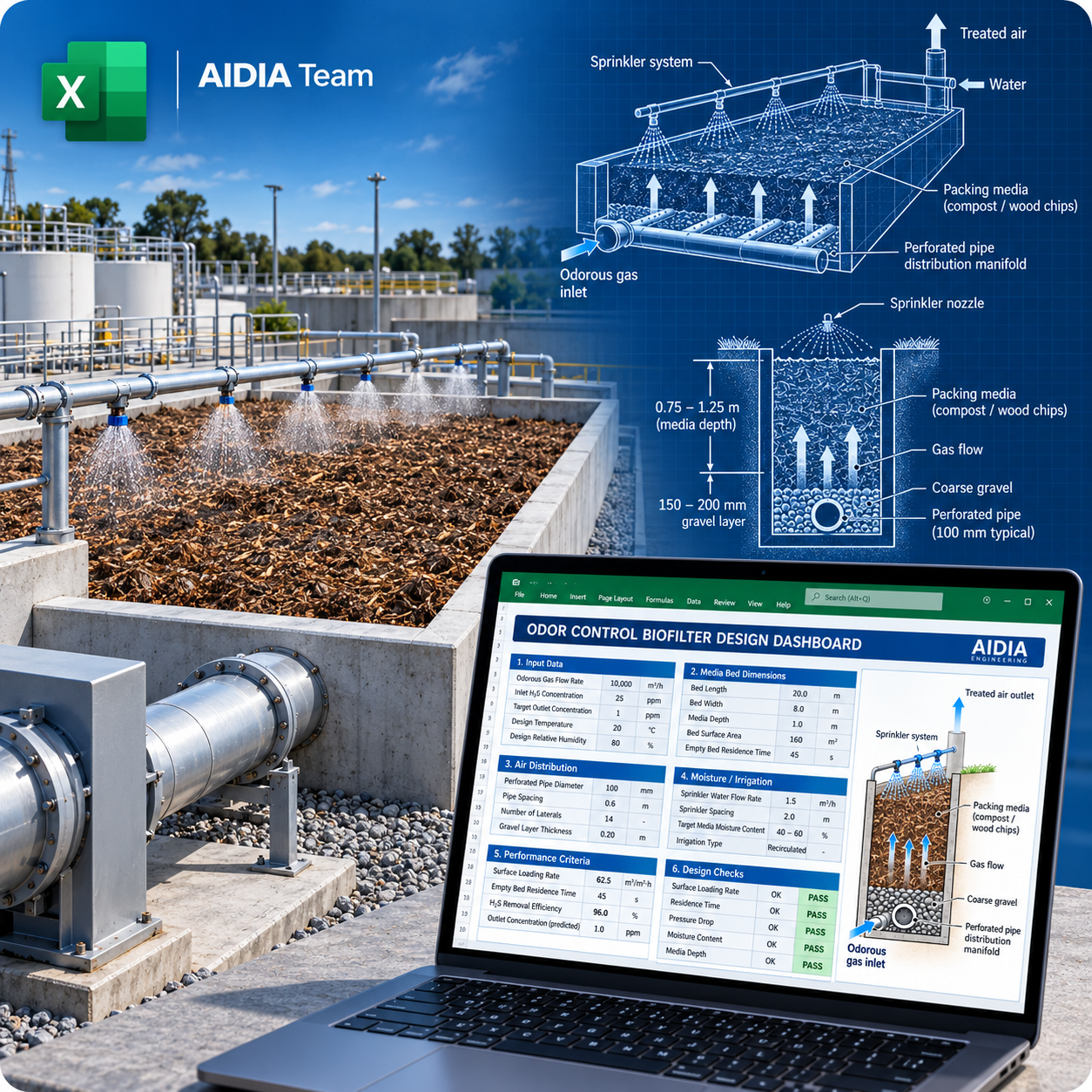
Convert enclosure volume and air-change assumptions into design airflow, or use a direct airflow input. Determine biofilter bed area, media depth, and rectangular bed dimensions.
Estimate H₂S mass loading from gas concentration and airflow, and compare the pollutant loading with the adopted elimination capacity.
Evaluate empty bed residence time (EBRT), surface and volumetric loading, selected media conditions, estimated back pressure, and buffer requirement.
A linked preliminary design workflow from ventilation requirements through packed-media sizing, H₂S mass-loading screening, and operating checks.
Workbook Experience
Review actual Calculation Sheet and Dashboard excerpts before purchasing the workbook.
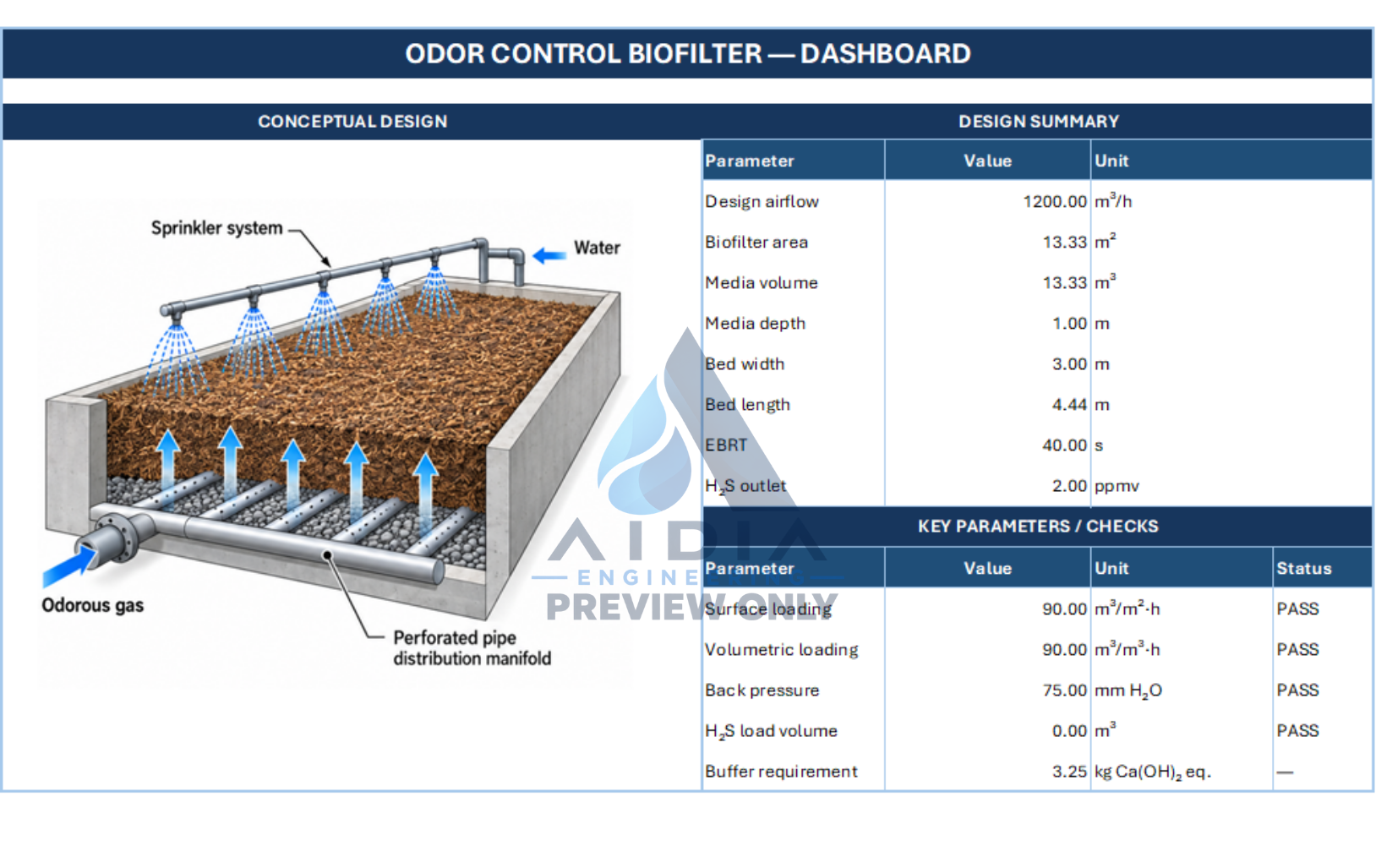
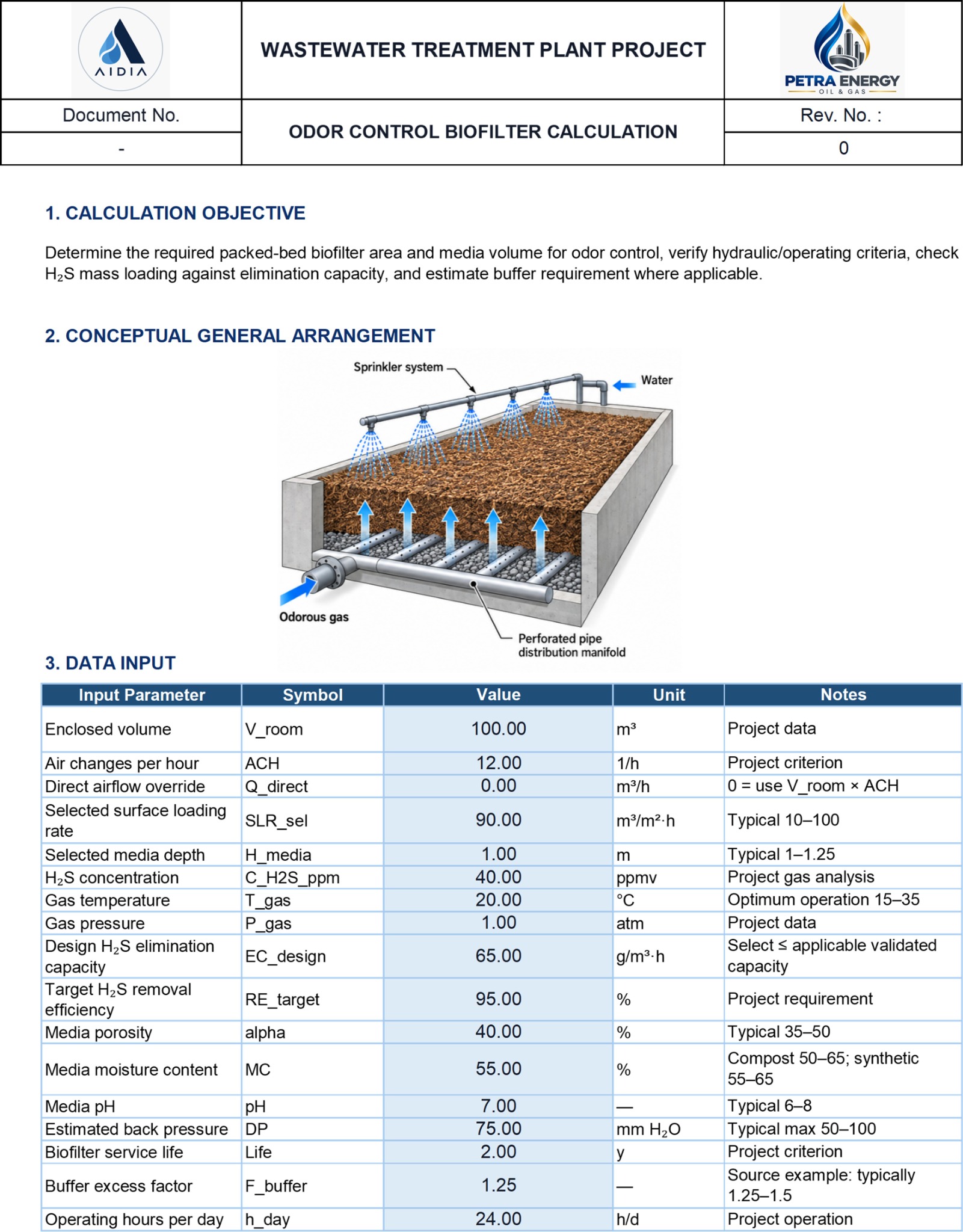
Actual odor control biofilter dashboard excerpt showing bed dimensions, EBRT, and selected operating checks. Values are illustrative and do not predict field removal performance.
Review the preliminary packed-bed sizing and operating basis against the selected project criteria.
| Review Item | Workbook Evaluation |
|---|---|
| Air surface loading | Review selected surface loading against the adopted operating range |
| Volumetric loading & EBRT | Evaluate airflow relative to media volume and empty bed residence time |
| H₂S elimination capacity | Compare estimated H₂S mass loading against the adopted media elimination capacity |
| Media operating conditions | Check selected media moisture content, pH, and operating assumptions |
| Estimated back pressure | Screen the assumed biofilter pressure drop against the design limit |
These checks are preliminary. The displayed outlet H₂S concentration is derived from the user-selected removal target, not an independently validated biological kinetics model. Confirm contaminant loading, packing performance, blower requirements, irrigation, and buffer demand with project-specific data.
Purpose & instructions
Project information
Airflow, media sizing & H₂S loading
Conceptual arrangement & design summary
Symbols & units
AIDIA supports preliminary engineering calculation and design review. Final odor-removal performance, H₂S elimination capacity, media selection, airflow distribution, and operation must be confirmed against project-specific criteria and professional engineering judgement.
Move from odor-source airflow and H₂S loading assumptions to packed-bed sizing and a structured engineering review workbook.