1. What Is Flocculation G-Value?
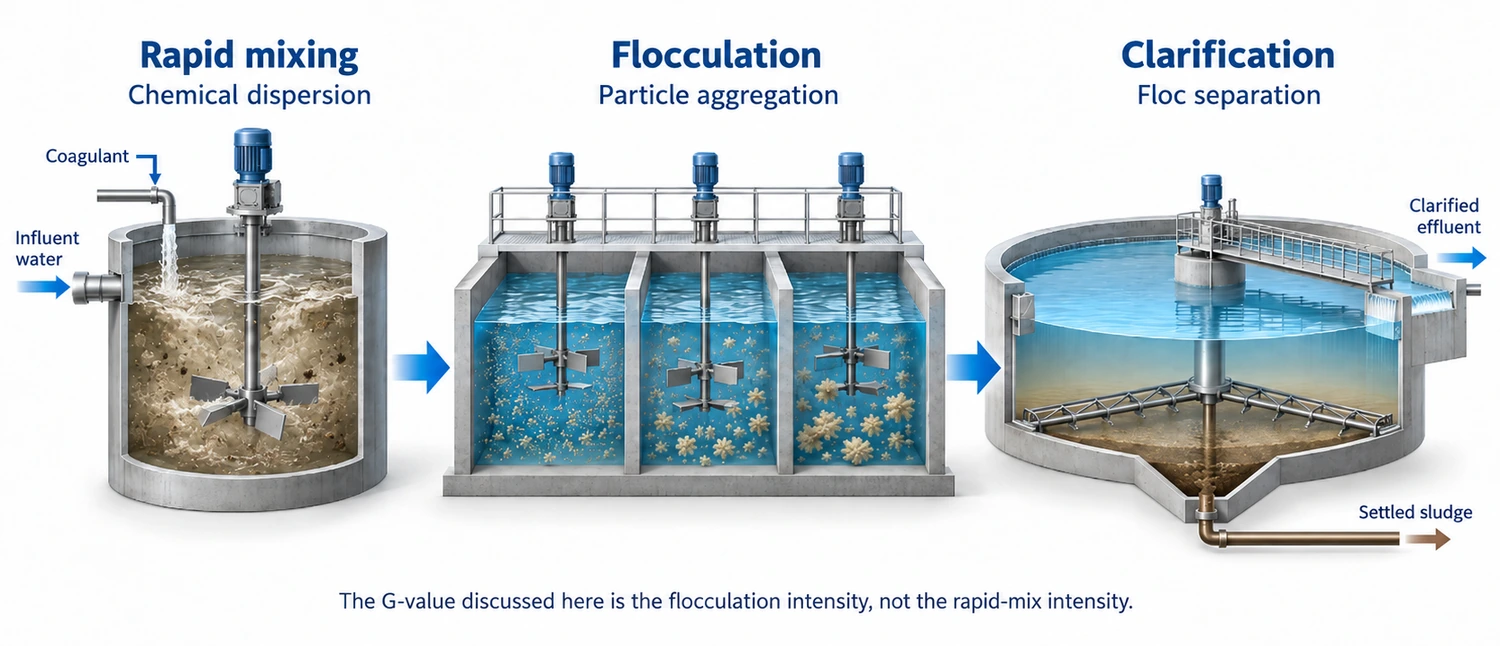
The velocity gradient, commonly called the G-value, is a practical indicator of the average mixing intensity applied during flocculation. It helps engineers describe how actively water is mixed while destabilized particles collide and combine into larger flocs.
Flocculation typically follows rapid mixing and coagulation. Rapid mixing disperses coagulants; flocculation provides more controlled agitation to encourage particle collisions without damaging the aggregates that form.
2. Why Does Mixing Intensity Matter?
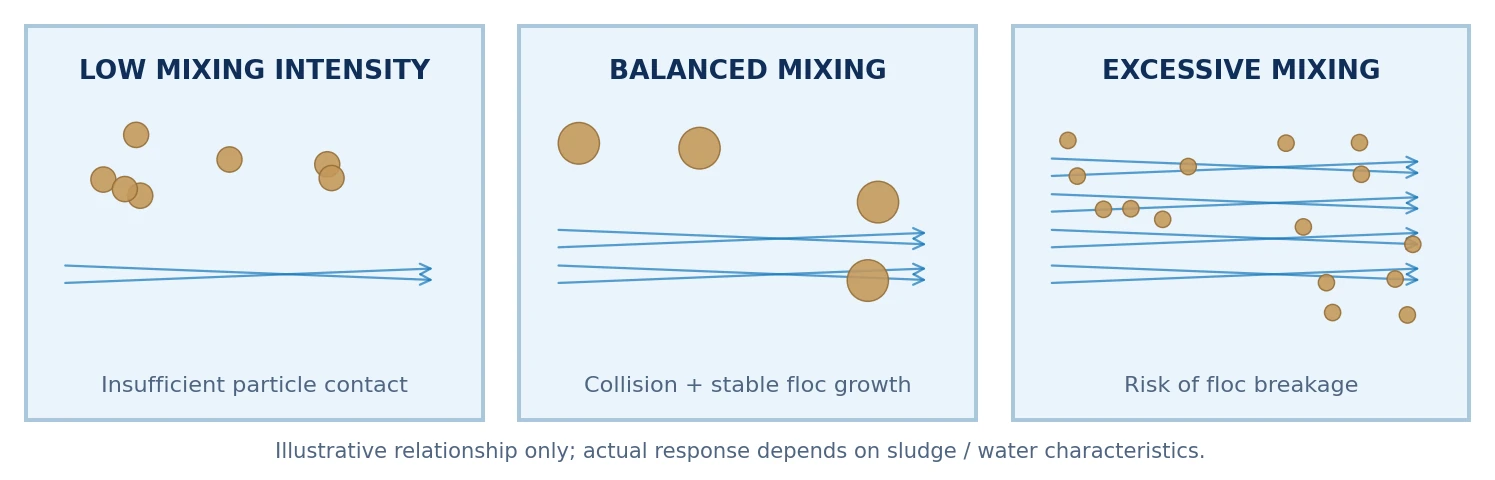
If flocculation is too gentle, particle contact may be insufficient and flocs may remain small. If mixing is too aggressive, existing flocs may be broken apart or prevented from growing. The preferred condition balances particle collision opportunities with floc integrity.
The best operating intensity is not universal. It depends on raw water or wastewater characteristics, coagulant chemistry, temperature, tank geometry, and the mechanical mixing equipment.
3. What Determines the Appropriate G-Value?
Water and suspended-solid characteristics
Turbidity, particle size distribution, solids concentration, and colloidal matter affect how readily flocs form.
Coagulant and polymer selection
Different chemicals create flocs with different strength and growth behavior. Intensity should be assessed together with dose, pH, addition point, and treatment objective.
Temperature and water properties
Temperature affects water viscosity and therefore influences mixing behavior and particle collision conditions.
Downstream separation process
Sedimentation, dissolved air flotation, and filtration may favor different floc characteristics; mixing should align with the actual separation mechanism.
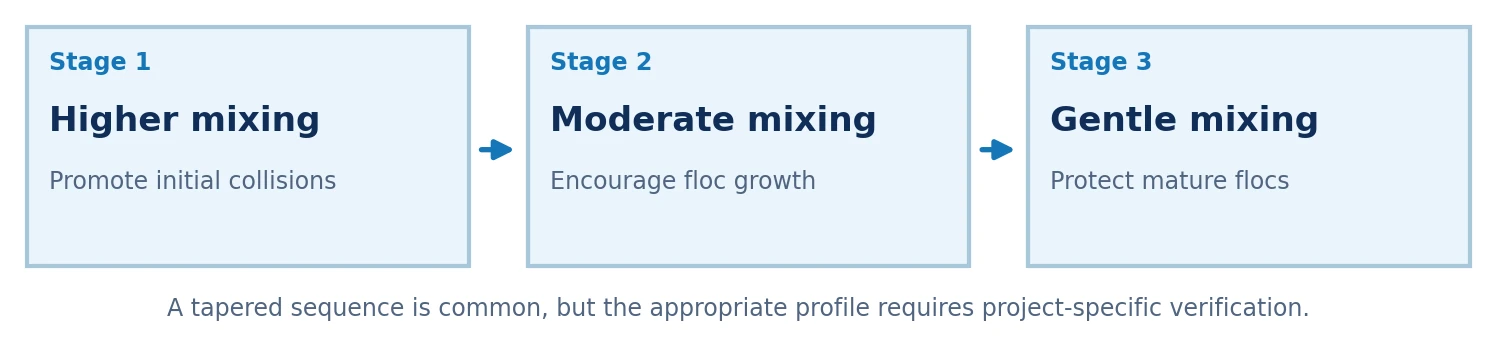
4. A Practical Approach to G-Value Selection
5. Important Design Checks
6. Common Mistakes to Avoid
7. Conclusion
Selecting a flocculation G-value is an engineering decision rather than a simple lookup exercise. The objective is to provide sufficient mixing for particle aggregation while maintaining the integrity of the flocs needed by the downstream separation process.
A sound selection process combines influent characterization, chemical treatment knowledge, process configuration, treatability evidence, equipment verification, and operational flexibility. These considerations help engineers develop flocculation systems that are efficient, controllable, and suitable for their intended application.
Engineering References
- American Water Works Association (AWWA) / American Society of Civil Engineers (ASCE). Water Treatment Plant Design.
- Crittenden, J. C., et al. MWH’s Water Treatment: Principles and Design. Wiley.
- Metcalf & Eddy / AECOM. Wastewater Engineering: Treatment and Resource Recovery. McGraw-Hill Education.
- Water Environment Federation (WEF). Design of Water Resource Recovery Facilities (Manual of Practice No. 8).
This educational article describes principles and selection considerations, not a verified design basis for a specific project. Final criteria and operating settings should be confirmed through applicable standards, testing, process performance requirements, and qualified engineering review.